2020 brought on some unexpected changes and alternate plans for many, with my own plans for the year being no exception. While social-distancing, limited travel options, and cancelled vacation plans surfaced, I decided to make the best of the free time I had and managed to go out and explore in my local region. Here is a recap of the transit systems and operations I was fortunate enough to visit or document during what was a rather crazy and unpredictable year.
- Metro Transit, Twin Cities, MN. This is my home system, was easy enough to visit as I use and see it on an almost daily basis. For a notable photo to represent it this year I chose one of my first ones taken, which is of a retired 71xx series Gillig Hybrid unit. These were obtained in 2007 by the agency and marked their first major hybrid bus purchase. They were fairly unique as these buses were originally ordered and spec'd for operation by the RGRTA - Regional Transit Service of Rochester, NY. Metro Transit 7113
- Metropolitan Transportation Services, Twin Cities, MN. MTS is a division of the Metropolitan Council which oversees contracted route operations among other things. Their bus services are essentially the same as Metro Transit, however the actual operations are contracted to various private operators. For a representative photo in 2020, here is bus 1445 on route 16 in downtown Saint Paul. The bus is being operated by contractor Metropolitan Transportation Network, a school bus contractor based in Fridley, MN. MTN ceased operating the transit routes for MTS a short time later with the buses and operation transferred to First Transit. Metropolitan Transportation Services 1445

- Janesville Transit System, Janesville, WI. Now, onto what turned out to be the first road trip of the year. The first stop on this trip was in Janesville. here is JTS 451, a Gillig Low Floor 35' unit seen in a shopping plaza off of Milton Ave. JTS had previously operated an all New Flyer fleet of buses, which were getting quite old and maintenance intensive. The system was finally able to acquire some funding for new buses in 2019 with Gillig being chosen as the manufacturer. Janesville Transit System 451

- PACE, Schaumburg, IL and greater Chicagoland. The next system covered on this road trip was PACE Bus. The fixed-route fleet of 35' and 40' buses at PACE has steadily evolved from once being largely Orion VI and NABI LFW units, to Eldorado Axxess units. Here bus 6409 is seen on layover by the Northwest Transportation Center in Schaumburg. PACE 6409

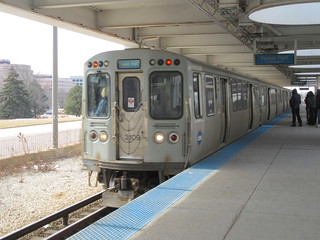
- Chicago Transit Authority, Chicago, IL. Venturing on to the destination of this road trip, the Chicago Auto Show, it's impossible to not encounter the CTA! Here is the first CTA vehicle encountered, car 3109 leading a Blue Line train on an inbound run at Rosemont CTA. CTA 3109
- Madison Metro Transit, Madison, WI. While returning from Chicago to the Twin Cities, a quick stop in Madison was able to be made. Bus 1913 represents the shift from being a largely Gillig Low Floor fleet, to the agency's latest bus procurement of New Flyer Xcelsiors. 1913 also sports the new Metro Transit brand and livery, a change from the previous Madison Metro 'M' graphics. Madison Metro 1913

- Maple Grove Transit, Maple Grove, MN. Back in the Twin Cities again, this lone photo of MGT bus 60126 on layover near Target Field ended up being my only time observing their operation in 2020. This was taken on March 10th, shortly before the Pandemic of 2020 suddenly changed life as we knew it here in Minnesota. Maple Grove Transit 60126

- DELTA Airlines employee shuttle system, MSP Airport. April 11th, the Pandemic and statewide stay at home orders now in full effect. DELTA bus 854, operated by First Transit, is seen here at MSP Terminal 1 on the DELTA parking shuttle. The service was suspended a few weeks after this, as using small vans to move any remaining flight crew was more economical. DELTA 854

- Minnesota Valley Transit Authority, Burnsville, MN and south suburbs. At the end of April, I drove over to the Cedar Grove Transit Station for a bit of socially-distanced transit photography as state restrictions on travel were relaxed a bit. Motorcoach 4840 was a rather odd sighting being on local route 444. With social-distancing suddenly being a factor and the traditional offering of assorted commuter express routes suddenly suspended with very little demand, these coaches were run on the route in lieu of the usual 40' buses. MVTA 4840

- Mayo Clinic Campus Shuttle, Rochester, MN. With travel restrictions relaxed as more was learned about the virus and contending with it's effects, it was time to get out of the day-to-day routine and go on a quick day trip. Rochester, MN was the destination this time. Here Groome Transportation bus 684 is seen on the Mayo Clinic shuttle. Groome took over the shuttle system operations at some point in 2018 after Laidlaw Transit and the First Transit had operated it for several years. An entirely new fleet of buses was brought in, these being the ARBOC Spirit of Equess model. Groome Transportation 684

- Rochester Public Transit, Rochester, MN. Obviously one cannot go transit fanning in Rochester, MN without encountering the RPT system! Here is bus 276, one of the system's newest buses at the time, seen on layover in the downtown area. Rochester Public Transit 276

- MATBUS, Fargo, ND. On to road trip #2, a nice mid-July drive through North Dakota. First stop, Fargo. Here MATBUS 1222 is seen working route 20 at West Acres Mall. MATBUS 1222

- Bis-Man Transit, Bismarck, ND. Road trip #2 stop 2, downtown Bismarck. Bus 1909 is a 2019 Alexander-Dennis Enviro 200 model. ADL has been making some progress marketing their 200 model in the North American market among smaller transit operators and agencies. Bis-Man Transit 1909
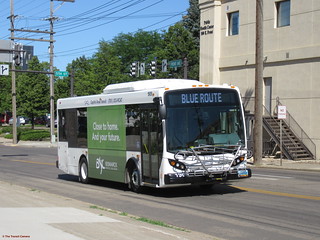
- Minot City Transit, Minot, ND. Road trip #2 stop 3, downtown Minot. The Minot city bus system is fairly simple with a series of routes laid out in loop pattern and operated on 60 minute frequency by 3 buses. The fixed-route fleet is comprised of Eldorado EZ-Rider units in both the II Max and BRT styles. Bus 1011 is seen here on the South 1 route departing the Civic Center downtown transfer point. Minot City Transit 1011
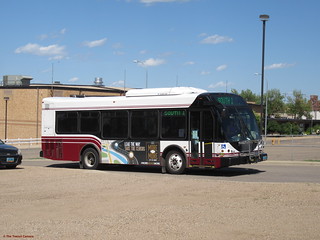
- Cities Area Transit, Grand Forks, ND. Road trip #2, stop 4, downtown Grand Forks. CAT operates a fairly robust route network for a city the size of Grand Forks. Routes pulse every 30 minutes at the downtown transit center. One such pulse is seen here, with a representation of the CAT fleet shown. Cities Area Transit Buses

- River Falls Public Transit, River Falls, WI. In September it was time for another day trip, so with a destination of Eau Claire, WI I set out, making stops along the way in River Falls and Menomonie. First up, we see one of the River Falls Public Transit vans parked in downtown River Falls near a supermarket. This sort of general public dial-a-ride system is common throughout the US in more rural areas. River Falls Public Transit 307

- Dunn County Transit, Menomonie, WI. Bus 318 was the lone unit I managed to get a photo of while in downtown Menomonie. DCT operates 2-3 routes, however the Stout route bus 318 is seen on in this photo is the most frequent. Dunn County Transit 318

- Eau Claire Transit, Eau Claire, WI. Bus 504 was one of the newest units observed during this visit. It is a 2020 Gillig Hybrid unit and is seen here arriving at the downtown transfer point on the popular 1-Margaret and Mall route. Eau Claire Transit 504

- Southwest Transit, Eden Prairie, MN and southwest suburbs. Having last visited downtown Minneapolis in March, a return trip was made in October to see how things were progressing. This ended up being my lone photo of a Southwest Transit unit in service for the year. Motorcoach 238 is seen here on Marquette Avenue working the 698 route. Southwest and other operators have largely trimmed down their express services during this prolonged period of decreased ridership. Southwest Transit 238

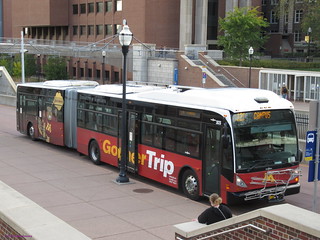
- University of MN PTS, Minneapolis, MN. A stop over at the U campus was also made to see the PTS campus shuttles. A few new secondhand Gillig Low Floors had joined the fleet. Otherwise the Van Hool buses were still the backbone. Articulated bus 3826 is seen here on the 121 Connector by Coffman Union. University of MN PTS 3826
- MIDAS Transit, Fort Dodge, IA. The final road trip of 2020, with a destination of Omaha, Nebraska was taken during the last stretch of nice weather in mid-December. MIDAS is a service of the Mid-Iowa Development Association Council of Governments (COG) and is based in Fort Dodge, Iowa. The system provides demand-response public transit service in the counties of Calhoun, Hamilton, Humboldt, Pocahontas and Wright. Bus 19-1 was observed during a stop in a shopping plaza in Webster City. MIDAS Transit 19-1

- SWITA, Southwest Iowa area. SWITA or the Southwest Iowa Transit Agency is demand-response public transit service serving all residents in the Southwest Iowa counties of Cass, Fremont, Harrison, Mills, Montgomery, Page, Pottawattamie, and Shelby. This bus of unknown unit number was seen while stopping in central Missouri Valley, Iowa. SWITA Bus

- Omaha Metro, Omaha, NE. O-Metro has continued to refine and grow it's system since my last visit a few years previous. Of particular interest on this visit was the recently opened ORBT rapid bus line. This service replaced what was route 2 on Dodge St. It provides service on a 10-15 minute frequency with stops made only a designated ORBT stations along the line. Bus 1905 is one of several New Flyer Xcelsior XN60 units dedicated to running the service. They represent the first articulated buses to be added to the O-Metro fleet, and are also the first CNG transit buses, marking the fleet's eventual changeover from diesel to natural gas. Omaha Metro 1905

- Sioux City Transit, Sioux City, IA. The final system visited to add to the 2020 list was Sioux City Transit. SCT operates a network of 10 routes on 60 minute frequency with a connecting pulse hourly at the downtown MLK Jr. Multimodal Transportation Center. Bus 1369 is seen as a representative view of the operation, departing the MLK Jr. transit center on route 1. As is or was the case with several transit operators at the end of 2020, a notice is seen taped on the front door alerting riders to board at the rear. The back side is also festooned in a colorful superhero prahic promoting the use of masks in an effort to control the spread of COVID. Sioux City Transit 1369


Overall with the opprtunity to visit and/or document 24 different transit systems or operations, 2020 was a decent year in that regard. Here's hoping that perhaps during 2021 we will see an eventual return towards some more normality. Meanwhile, be safe, take precautions for your health and to protect others, and stay positive.